

Your dental website is often the first place a potential patient learns about your practice.
Before calling your office, many people will check your website to see your services, location, reviews, doctors, office photos, and whether it is easy to book an appointment. A modern dental website can build trust before a patient ever walks through your doors.
But what actually makes a dental website effective?
A good dental website is more than an attractive homepage. It should be fast, mobile-friendly, easy to navigate, trustworthy, and designed to turn website visitors into new patients.
In this guide, we will look at the most important elements of a successful dental website and how dentists in the USA can use their website to generate more patient inquiries.
1. A Professional and Trustworthy Design
Patients want to feel comfortable before choosing a dentist.
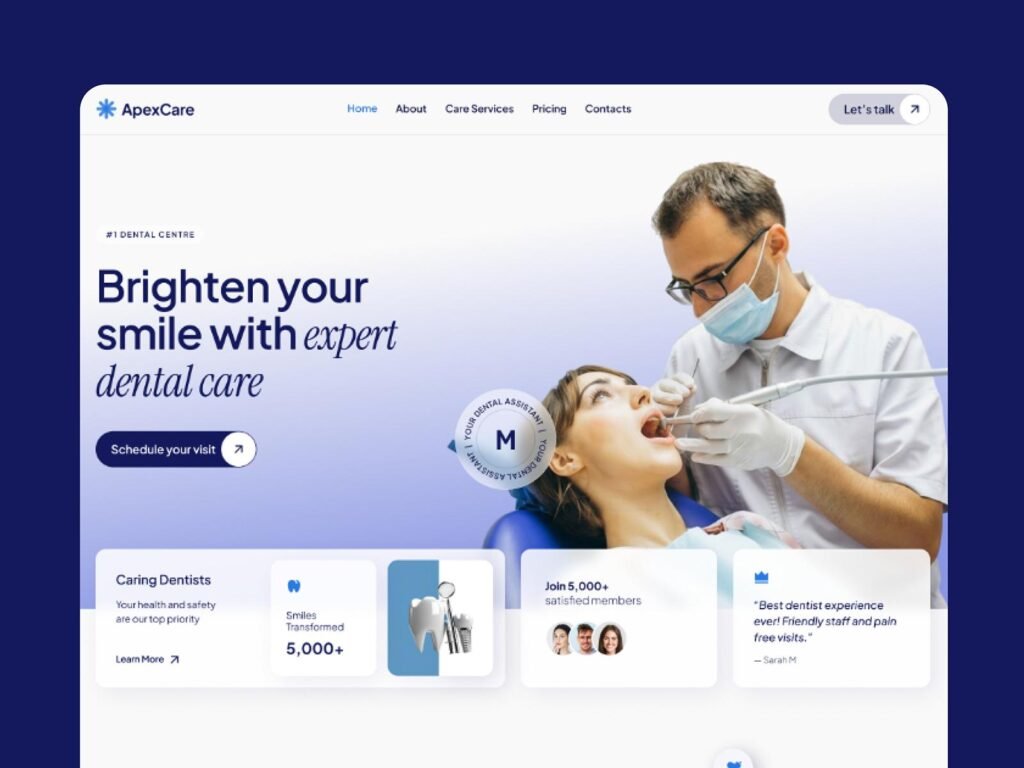
Your website should immediately communicate professionalism and trust. A clean layout, high-quality images, readable typography, consistent branding, and clear information can make a strong first impression.
Avoid overcrowding the homepage with too much information. Instead, focus on the things a new patient wants to know:
- Who are the dentists?
- What services do you provide?
- Where is the dental office?
- Do you accept insurance?
- What do other patients say?
- How can I book an appointment?
A professional dental website should answer these questions quickly.
2. Mobile-Friendly Design
A large number of potential patients will visit your website from smartphones.
If your website is difficult to use on a mobile device, visitors may leave before contacting your practice.
A mobile-friendly dental website should have:
- Easy-to-read text
- Simple navigation
- Large, easy-to-tap buttons
- Fast-loading pages
- Responsive images
- Easy access to phone and appointment buttons
Your website should provide the same quality experience on phones, tablets, laptops, and desktop computers.
3. Clear Calls to Action
One of the biggest mistakes dental practices make is hiding their contact options.
If someone wants to schedule an appointment, they should not have to search through several pages to find your phone number.
Use clear calls to action such as:
Book an Appointment
Call Our Dental Office
Request an Appointment
Contact Our Team
These buttons should appear naturally throughout the website, especially on important service pages.
The goal is simple: make it easy for a potential patient to take the next step.
4. Fast Website Speed
Website speed matters for both patients and search engines.
Imagine someone searching for a dentist on their phone. They click your website, but the homepage takes several seconds to load. There is a good chance they will leave and visit another dental practice instead.
A fast dental website should use properly optimized images, clean code, reliable hosting, caching, and only the necessary plugins and scripts.
Improving page speed can create a better user experience and help your website perform better in search results
.
5. Individual Dental Service Pages
Your dental website should not put every service into one long page.
Instead, create dedicated pages for important treatments and procedures.
For example:
- General Dentistry
- Emergency Dentistry
- Dental Implants
- Cosmetic Dentistry
- Teeth Whitening
- Dental Crowns
- Root Canal Treatment
- Invisalign
- Pediatric Dentistry
- Dentures
Individual service pages give patients more information about each treatment and create additional opportunities to appear in Google search results.
For example, someone searching for “dental implants in [city]” is more likely to find a dedicated dental implant page than a general homepage that only briefly mentions implants.
6. Local SEO for Dental Practices
For dentists, local search visibility is extremely important.
Most patients are not searching for a dentist anywhere in the country. They are looking for a dental office near their home, workplace, or neighborhood.
Your website should clearly mention your service area and location.
Important local SEO elements include:
- Dental office address
- City and state
- Service areas
- Google Business Profile
- Local business information
- Location-specific service pages when appropriate
- Consistent contact information
- Patient reviews
For example, instead of simply targeting “dental implants,” a practice may benefit from targeting searches such as “dental implants in Miami” or “cosmetic dentist in Los Angeles.”
The exact keywords should depend on the location and services offered by the practice.
7. Patient Reviews and Testimonials
Patients want to know that other people had a positive experience with your dental practice.
Displaying genuine patient reviews and testimonials can help build confidence.
You can include reviews throughout your website, particularly on:
- Homepage
- Service pages
- About page
- Appointment page
Never use fake reviews. Genuine feedback from real patients is much more valuable for building long-term trust.
8. Dentist and Team Information
People want to know who will be treating them.
A strong dental website should have an About or Meet the Team section with useful information about the dentists and staff.
Consider including:
- Dentist photos
- Education
- Qualifications
- Professional experience
- Areas of expertise
- Professional memberships
- A short personal introduction
Professional photography can also make the practice feel more welcoming and familiar.
9. Real Photos of the Dental Office
Stock photos can make a website look generic.
Whenever possible, use real photos of your dental practice.
Useful photos include:
- Reception area
- Treatment rooms
- Dental team
- Dentists
- Exterior of the building
- Equipment
- Waiting area
Real photography helps potential patients know what to expect when they visit your office.
10. Easy Appointment Booking
A dental website should make scheduling an appointment as simple as possible.
Your appointment form should only ask for information that is actually necessary.
A basic form might include:
- Name
- Phone number
- Preferred appointment time
- Message
You can also make your phone number clickable on mobile devices so patients can call your office with one tap.
If your practice uses an online booking system, make the booking button highly visible throughout the website.
11. Helpful Dental Content
A dental website can attract more visitors by answering common patient questions.
For example, you could publish articles about:
- How long do dental implants last?
- What happens during a root canal?
- How often should you visit the dentist?
- What are the benefits of Invisalign?
- How can you prevent cavities?
- What should you do during a dental emergency?
- How much does teeth whitening cost?
- What is the recovery time after dental implant surgery?
Helpful content can bring people to your website before they are ready to book an appointment.
When the content is useful and the website provides a clear next step, those visitors can eventually become patients.
12. Search Engine Optimization
A beautiful website is not enough if potential patients cannot find it.
Dental website SEO should include proper keyword targeting, page titles, meta descriptions, headings, internal links, image optimization, technical SEO, and local SEO.
Each important page should have a clear purpose.
For example, a dental implant service page should focus on dental implants rather than trying to rank for every dental-related keyword.
SEO should also be written naturally for patients. Avoid filling pages with repetitive keywords.
13. Strong Internal Linking
Internal links help visitors move around your website and help search engines understand the relationship between your pages.
For example, a blog post about dental implants can link to your dental implant service page.
Similarly, service pages can link to your appointment page, About page, and other relevant treatments.
Internal linking can improve navigation while helping distribute authority throughout your website.
14. Secure HTTPS Website
Security is essential for every dental practice website.
Your website should use HTTPS and have a valid SSL certificate.
This is especially important if patients submit their name, phone number, email address, or other information through an online form.
You should also keep WordPress, themes, plugins, and other website components updated and use appropriate security measures.
15. HIPAA Considerations
Dental practices in the USA should also consider privacy and compliance requirements when collecting or handling patient information online.
If your website collects protected health information, make sure the forms, booking systems, analytics tools, hosting environment, and other relevant services are configured appropriately for your practice’s compliance requirements.
Website design alone does not make a dental practice HIPAA compliant. Your practice should work with the appropriate legal or compliance professionals when necessary.
16. A Website Built to Generate Patients
The ultimate purpose of a dental website is not simply to look good.
It should help your practice generate real business.
Every important part of the website should support that goal:
Attractive design → Build trust
Helpful content → Answer questions
SEO → Attract search traffic
Reviews → Build credibility
Clear calls to action → Generate inquiries
Easy booking → Convert visitors into appointments
This is why dental website design should focus on both appearance and conversion.
What Should a Dental Homepage Include?
A strong dental homepage typically includes:
- A clear headline explaining what the practice offers
- A prominent appointment or contact button
- Introduction to the dental team
- Main dental services
- Benefits of choosing the practice
- Patient reviews
- Office photos
- Insurance or payment information
- Location and contact information
- A final call to action
The exact layout will depend on the practice, location, services, and target patients.
How Much Does a Dental Website Cost?
The cost of a dental website can vary significantly depending on the number of pages, design requirements, functionality, copywriting, SEO, booking integrations, and other features.
A basic informational website may be relatively affordable, while a custom dental website with advanced functionality and SEO can require a larger investment.
Instead of choosing a website based only on price, dental practices should consider whether the website can help attract and convert new patients.
Why Dental Practices Need a Modern Website
Patients have more choices than ever when searching for healthcare providers.
A slow, outdated, confusing website can make a practice appear less professional—even if the actual dental care is excellent.
A modern website gives your practice an opportunity to communicate your expertise, showcase your team, answer patient questions, build trust, and make appointment scheduling easier.
If your current website is outdated or not generating enough inquiries, a redesign may be worth considering.
Looking for a Dental Website Designer?
If you are a dentist or dental practice owner in the USA and need a modern, professional website, I can help.
I specialize in creating WordPress dental websites designed around the needs of dental practices, including responsive design, service pages, appointment forms, local SEO-friendly structure, and conversion-focused layouts.
You can learn more about my Dental Website Design Service and see more about my web design and WordPress services.
Whether you are launching a new dental practice or redesigning an existing website, the goal should be the same: create a website that looks professional, builds patient trust, performs well in search, and makes it easy for people to contact your office.
Final Thoughts
A great dental website is not just a digital business card.
It is a marketing tool that works around the clock.
The best dental websites combine professional design, mobile responsiveness, fast performance, useful content, local SEO, patient reviews, clear calls to action, and simple appointment booking.
If your dental website can answer a patient’s questions, build confidence, and make contacting your practice easy, you have already taken an important step toward turning website visitors into new patients.