

A dental website is often the first impression a potential patient has of your practice. Before calling your office, many people will check your website to see your services, meet your team, look at reviews, and decide whether they feel comfortable booking an appointment.
That makes dental website design more than just choosing a nice-looking template. Your website needs to look professional, load quickly, work well on mobile devices, and make it easy for visitors to take the next step.
If you own or manage a dental clinic in the United States, here are the most important things to consider when building or redesigning your dental website.
1. Your Dental Website Should Build Trust
Patients want to feel confident before choosing a dentist. A website that looks outdated, confusing, or unfinished can create the opposite impression.
Your homepage should quickly communicate:
- Who you are
- Where your dental office is located
- What services you provide
- Why patients should choose your practice
- How they can contact you or request an appointment
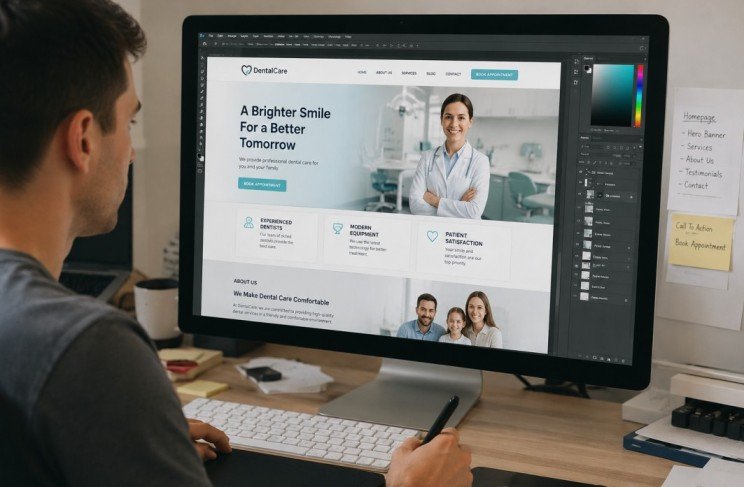
Professional photos of your dental office, dentist, and team can also make the website feel more personal. Patients are more likely to feel comfortable when they can see the people and environment behind the practice.
2. Mobile-Friendly Design Is Essential
A large number of people searching for a dentist use their smartphones. If your website is difficult to use on a small screen, potential patients may simply leave and visit another dental practice.
A modern dental website should have:
- Responsive design
- Easy-to-read text
- Large, easy-to-tap buttons
- Simple navigation
- Click-to-call phone numbers
- Easy appointment request forms
- Fast-loading images
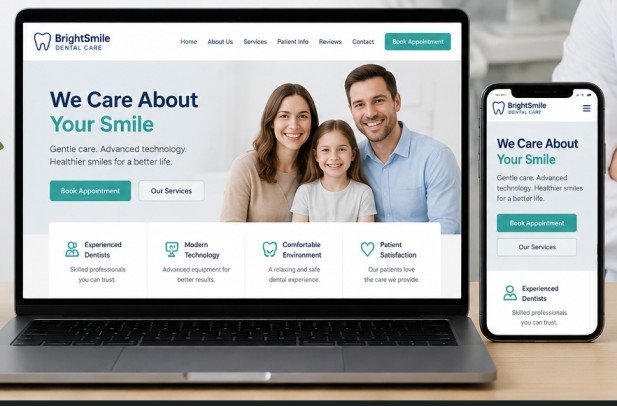
Your website should provide the same professional experience whether someone visits from an iPhone, Android phone, tablet, laptop, or desktop computer.
3. Make It Easy to Book an Appointment
One of the main purposes of a dental website is to turn visitors into patients.
Don’t make someone search through several pages just to find your phone number or appointment form.
Place clear calls to action throughout the website, such as:
Request an Appointment
Call Our Dental Office
Schedule Your Visit
A good dental website guides visitors toward taking action without making the process complicated.
4. Create Dedicated Pages for Dental Services
A common mistake is putting every dental service on one page.
Instead, consider creating individual pages for important treatments and services, such as:
- General Dentistry
- Cosmetic Dentistry
- Dental Implants
- Teeth Whitening
- Emergency Dentistry
- Invisalign
- Dental Crowns
- Root Canal Treatment
- Pediatric Dentistry
- Preventive Dentistry
Dedicated service pages can provide a better experience for patients and give search engines more relevant information about what your dental practice offers.
For example, someone searching for “dental implants in Los Angeles” is more likely to find a useful dental implant page than a website with one generic “Services” page.
5. Local SEO Matters for Dental Practices
Most dental patients aren’t looking for a dentist hundreds of miles away. They want a convenient dental office near their home or workplace.
That’s why local SEO should be part of your dental website strategy.
Your website should clearly mention your:
- City
- State
- Service area
- Office address
- Phone number
- Business hours
- Dental services
You should also make sure your Google Business Profile information is accurate and consistent with your website.
For example, instead of only writing:
Dental Services
You can naturally include location-focused information such as:
General Dentist in San Diego, CA
or
Cosmetic Dentistry in Irvine, CA
The key is to write naturally for patients rather than filling pages with repetitive keywords.
6. Website Speed Can Affect the Patient Experience
Nobody enjoys waiting for a website to load.
Large images, unnecessary plugins, poorly optimized code, and low-quality hosting can slow down a WordPress dental website.
A professional dental website should be optimized for performance by using techniques such as:
- Properly compressed images
- Modern image formats
- Browser caching
- Lightweight design elements
- Optimized CSS and JavaScript
- Reliable hosting
- Limited unnecessary plugins
A faster website makes it easier for visitors to browse your services and contact your practice.
7. Your Website Content Should Answer Patient Questions
People don’t always search for a dentist using the phrase “dentist near me.”
They may search questions such as:
- How much do dental implants cost?
- What happens during a root canal?
- How long does teeth whitening take?
- Is Invisalign right for me?
- What should I do during a dental emergency?
- How often should I visit the dentist?
Creating helpful content around these questions can bring additional visitors to your website.
A dental blog can also support your long-term SEO strategy by allowing your practice to publish useful information about oral health and your services.
8. Reviews and Testimonials Can Help Build Confidence
Patient reviews are extremely important when someone is comparing local dental practices.
Consider displaying genuine patient testimonials in appropriate areas of your website.
You can highlight feedback about:
- Friendly staff
- Comfortable appointments
- Professional dentists
- Clean facilities
- Communication
- Overall patient experience
Don’t use fake testimonials. Real experiences from your patients are much more valuable for building trust.
9. Your Dentist and Team Should Have a Strong Presence
Patients aren’t choosing a website. They’re choosing a dentist and a healthcare team.
An “About Us” page gives potential patients an opportunity to learn about the people behind your practice.
Consider including:
- Dentist biography
- Qualifications
- Professional experience
- Team members
- Office photos
- Your practice philosophy
- What makes your clinic different
Professional photography can make a significant difference here.
10. Security and Maintenance Should Not Be Ignored
A dental website collects and communicates important information, so security should be taken seriously.
If your website is built with WordPress, keep WordPress, themes, and plugins updated and use reputable security practices.
Your website should also use HTTPS and have reliable backups.
Regular maintenance can help prevent avoidable problems such as broken forms, outdated plugins, compatibility issues, and security vulnerabilities.
11. Your Website Should Work With Your Marketing
A website shouldn’t operate separately from your marketing strategy.
If your dental practice is running Google Ads, Facebook Ads, or other marketing campaigns, the website should be prepared to convert that traffic.
For example, a Google Ad for dental implants should ideally send visitors to a relevant dental implant landing page rather than simply sending everyone to the homepage.
This creates a more consistent experience:
Ad → Relevant Landing Page → Useful Information → Appointment Request
That’s much more effective than simply sending paid traffic to a generic page.
12. WordPress Can Be a Good Choice for Dental Websites
WordPress is a popular option for dental practices because it provides flexibility for both design and content management.
With a properly developed WordPress website, a dental practice can have:
- Custom page designs
- Service pages
- Blog functionality
- Appointment forms
- Mobile-friendly layouts
- SEO-friendly structures
- Integration with marketing tools
- Easy content updates
However, simply installing WordPress and a template isn’t enough. The design, structure, performance, security, and user experience all matter.
What Makes a Good Dental Website?
A successful dental website should combine several elements:
Professional design + strong content + local SEO + fast performance + mobile responsiveness + clear calls to action.
The goal isn’t simply to make the website look beautiful.
The goal is to help a potential patient move from:
“I need a dentist.”
to:
“This looks like a practice I can trust.”
and finally:
“I’ll request an appointment.”
Should You Redesign Your Dental Website?
If your current website looks outdated, isn’t mobile-friendly, loads slowly, is difficult to navigate, or doesn’t generate appointment requests, it may be time for a redesign.
A modern dental website should represent the quality of your practice and make it easy for potential patients to understand your services and contact your office.
If you’re looking for a professional dental website design service, I can help create a modern, responsive WordPress website designed specifically for dental practices.
You can also visit my portfolio and learn more about my web design services to see my work and approach to website development.
Final Thoughts
Your dental website is more than an online business card. It can become one of the most important tools for attracting new patients and growing your practice.
For U.S. dental clinics, the best website is one that combines a professional appearance with a simple user experience, strong local SEO, useful service information, fast performance, and clear appointment options.
If your website makes it easy for patients to find you, understand your services, trust your practice, and request an appointment, it is doing its job.